
Ancient Greek Islands: Myth in the Middle of the Sea
Anafi: According to mythology, it emerged from the sea by Apollo's will to shelter the Argonauts during a storm.
Delos: Practically an open-air museum, with its beautiful and important archaeological area including the port with its docks, the sanctuary with its temples, the area of the sacred lake with the famous 5 marble lions (guardians of the sacred lake), houses with mosaics, the theater, and the House of the Dolphin, a sanctuary of Egyptian gods. According to mythology, Apollo and Artemis were born on Delos, and people from all over the Greek world came to worship them.
Milos: Noteworthy on the island are the catacombs considered the second most important Paleochristian monument in the world (consisting of a central underground corridor and other smaller lateral ones, reaching a total length of 185 meters and it is estimated that more than 2000 Christians were buried there), the Roman theater with excellent acoustics, and the archaeological remains of significant Cycladic settlements at Filakopi. According to mythology, the island was named after its first inhabitant, Milos (the son of a noble Cypriot and Venus).
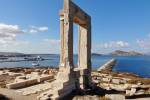
Naxos: Famous for the large portal of an unfinished temple on the island of Palatia next to the port. In Naxos, you can also see two marble "kouros" statues. According to mythology, Theseus, returning from Crete after killing the Minotaur, stopped at Naxos to rest Ariadne, who had followed him, but in a dream, Dionysus advised him to abandon her. Theseus obeyed, and Dionysus then kidnapped the girl.
Paros: Both in Parikia and Naoussa, there are ancient archaeological finds, but the island's main attraction is in the archaeological museum: a chronological table summarizing 1300 years of Greek history, providing the apocryphal date of Homer's birth.
Santorini: In terms of archaeology, you must see: Archaia Thira (ruins of the fortified ancient Thira) and Akrotiri (where the ancient city of the Bronze Age buried under meters of lava was found). In terms of legend, Santorini is believed to be the mythical Atlantis that sank into the sea due to a massive volcanic eruption.
Serifos: According to mythology, on this island, Perseus landed as a baby with his mother, who then married the wicked king of Serifos. Once grown, Perseus was sent by the king to kill Medusa, who had the power to petrify living beings. However, after killing her, he used her to petrify the king himself. Additionally, it is said that there is a cave on the island where the Cyclops blinded by Odysseus took refuge.
Syros: The island's archaeological areas are the fortified settlement of Kastri from 2300-2220 BC and the vast necropolis of Chalandriani with about 600 tombs from the Copper Age. DODECANESE Kassos: On the island, you can visit the cave of Ellinokamara (an ancient place of worship), surrounded by Cyclopean walls and also interesting because it was the refuge of the islanders during pirate attacks.
Kos: On the island, you can admire the Doric temple of Aphrodite, the Odeon and Roman houses with beautiful mosaics, early Christian basilicas, thermal baths, an ancient theater, a hippodrome, and the famous Temple of Asclepeion, which was the hospital of antiquity, started in the 4th century BC and also included a medical school. In the Kefalos area, you can visit the ruins of Astypalea (the birthplace of Hippocrates, the father of medicine) with the cave of Aspri Petra and its Neolithic finds.
Nisyros: Famous for its volcano, it also offers some archaeology: an acropolis with walls of massive black volcanic stones from the 4th century BC, the foundations of a temple of Zeus, and the remains of a Roman villa. According to mythology, the island was formed by breaking away from Kos during a battle between gods and giants.
Patmos: The island in ancient times was a land of exile and became famous because Saint John the Evangelist was confined there in an attempt to limit the spread of Christianity. In a cave overlooking the sea, now a pilgrimage destination, Saint John dictated the Apocalypse to his disciple. Inside the cave, the spots where Saint John knelt, meditated, or slept are highlighted according to tradition.
Rhodes: On the island, you can admire several archaeological sites: the Acropolis of ancient Rhodes (with the ruins of a temple of Apollo, the ancient stadium, and the Odeon), the ruins of the ancient city of Ialissos (with the remains of a temple and a fountain with six columns), the ruins of the ancient city of Kamiros, and the beautiful Lindos with its acropolis. According to mythology, the island arose from the union of Helios, the sun god, and the nymph Rhodos. It should also be remembered that Rhodes once had a gigantic statue of the god Helios, called the "Colossus of Rhodes," probably located in the harbor and considered one of the seven wonders of the ancient world.
Tilos: The caves of Kharkhadio, where prehistoric tools and the bones of a dwarf elephant species (about 120-160 cm tall) were found, are worth seeing. IONIAN ISLANDS Kefalonia: The most interesting area for findings is ancient Krani with the remains of the old city's walls (about the 6th century BC).
Corfu: See the archaeological site of Palaeopolis where the market was held in ancient times and the Temple of Artemis with its beautiful pediment. According to Homer's Odyssey, Odysseus also arrived in Corfu, who, after a period as a guest of Nausicaa, finally returned to Ithaca.
Ithaca: Known worldwide for being the homeland of Odysseus, the hero sung by Homer in the Odyssey, who stayed away from his beloved island and his wife Penelope for 20 years. On the island, you can see the Cave of the Nymphs (where Odysseus hid the gifts of the Phaeacians upon returning from Troy) and the Fountain of Arethusa (where he met the faithful Eumaeus).
Lefkada: The archaeological sites on the island are in the capital, Ellomenos, Apollonio, and Kalamos. According to myth, the island is famous because here the poetess Sappho committed suicide by jumping from the cliffs of Cape Lefkada due to a love disappointment. NORTH AEGEAN
Chios: Among the island's archaeological sites, we point out a large village from the 8th century BC, an acropolis with the Temple of Athena, and the Temple of Apollo. You can also see the cave of Agio Gala inhabited since the Neolithic. Regarding myth, the island prides itself on being the birthplace of Homer, and you can admire on the island an enormous split rock (called "petra tou Omirou") where, according to tradition, Homer sat to teach.
Ikaria: The island's archaeological sites are Kampos (where the ancient city of Dionisiada stood because Dionysus loved its wines), Na Bay (with the remains of the Temple of Artemis Tavropolos), and the tower of Drakanos (a circular Byzantine construction from the 3rd century BC) with the ruins of a classical acropolis nearby. Regarding mythology, Ikaria is the birthplace of Dionysus and the favorite island of Artemis. But the most famous legend is that of Icarus (who gave his name to the island), the son of Daedalus, who fled the labyrinth of Minos by building wings of feathers and wax. Flying too close to the sun, however, the wax melted, and he fell into the sea.
Lesbos: On the island, you can admire the ancient and prestigious theater of Mytilene, the ruins of Pyrra on the sea floor, the ruins of three early Christian basilicas near Eressos, and a beautiful Roman aqueduct consisting of 12 arches that brought water from Mount Olympus to Mytilene.
Lemnos: The main archaeological sites are the ancient city of Hephaestia from 1000 BC, Poliochni with a Bronze Age city, and the ruins of the ancient sanctuary of the Cabeiri. According to mythology, Lemnos was the residence of the god Hephaestus, who married the beautiful Aphrodite and taught the island's inhabitants how to melt bronze.
Samos: On the island where, according to mythology, Hera, the wife of Zeus, was born, the main archaeological sites are: Heraion with the ruins of the Temple of Hera (considered one of the seven wonders of the ancient world) and Pythagorion, the first underground aqueduct in history, which ingeniously provided spring water from the mountains to the city after a journey of about one kilometer. In this area, you can also admire the ruins of the walls of Polycrates and an ancient theater.
Samothrace: On the island, there is an interesting archaeological area of Paleopolis, including the Sanctuary of the Great Gods and the remains of various buildings, including a theater and a unique round building. In this area, the famous "Nike of Samothrace or Winged Victory," now exhibited in the Louvre Museum, was found, which, according to mythology, was the daughter of the Titan Pallas and the nymph Styx.
Thassos: In the capital, there is the archaeological site of the ancient city where you can see the remains of a couple of temples and the agora. Nearby, there are the theater, where performances are still held today, and the acropolis. At Alyki, you can admire an ancient port and the remains of a village with two early Christian churches and two temples. According to mythology, Thassos was the homeland of the sirens. SPORADES-EUBOEA Euboea: On this large island, there are several archaeological sites, particularly: the Temple of Artemis (one of the most important archaeological discoveries in recent years), the ancient Eretria and Distos, the prehistoric caves of Nea Stira, and the thermal station of Aidipsos (the largest thermal site in Greece). SARONIC GULF Aegina: Inhabited since the Neolithic, the island's main sights are the beautiful Temple of Aphaia (5th century BC) and a fluted column that was part of a temple of Apollo (5th century BC). According to mythology, the island was named after the nymph Aegina.
Poros: On the island, you can see traces of the Temple of Poseidon, where Demosthenes poisoned himself to avoid being captured by Macedonian soldiers. The island, according to mythology, was the homeland of Poseidon, the god of the sea. CRETE
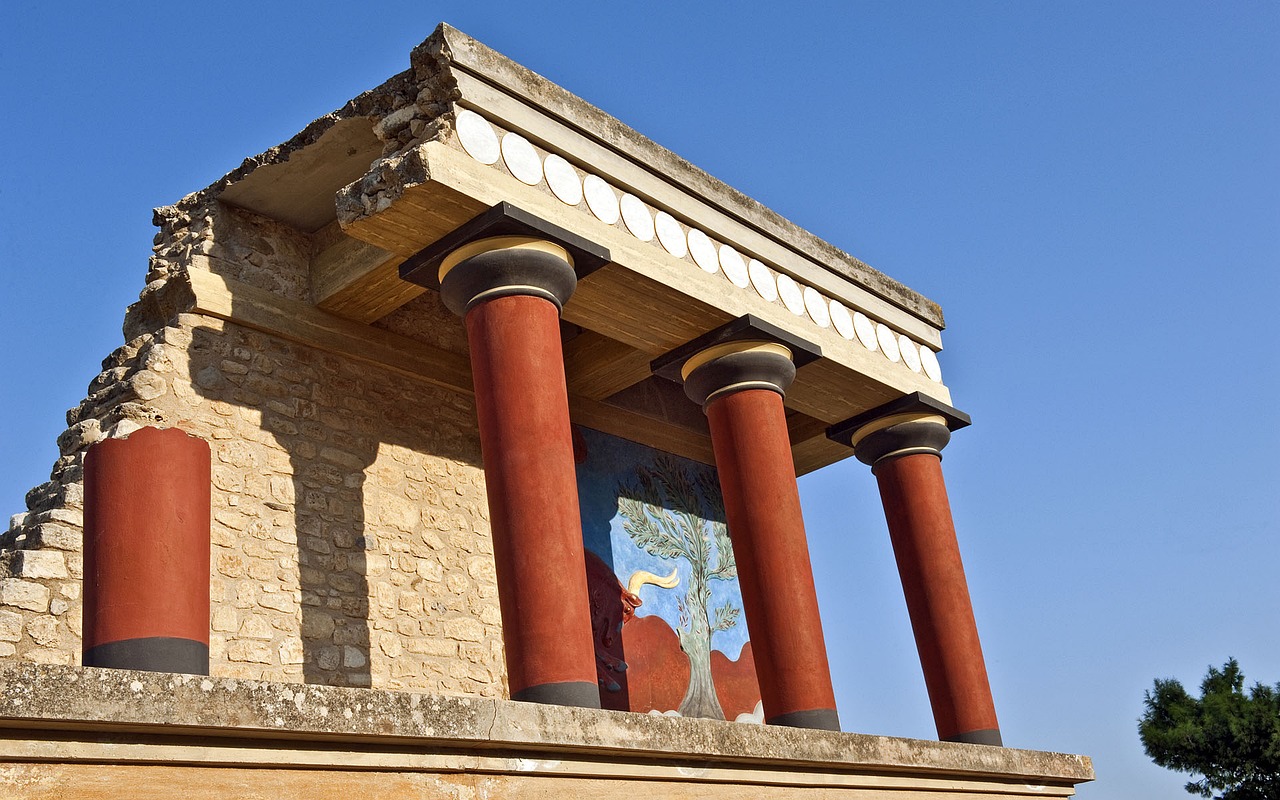
An island with very important archaeological sites such as: Minoan Knossos with its beautiful ruins including the famous and gigantic Labyrinth, Gortyn (a rival city of Knossos), and Lassithi with the cave of Dikteo where, according to mythology, Zeus was raised. According to mythology, the legendary Labyrinth of Knossos was built by Daedalus at the behest of King Minos to imprison the monstrous Minotaur, born from the union of the king's wife and a bull. The bull was later killed by Theseus with the help of Ariadne, who provided him with a thread to find his way back inside the labyrinth. At that point, since the secret of the labyrinth had been revealed, Minos punished Daedalus by imprisoning him and his son Icarus in it. However, they managed to escape by flying, although with a tragic end well known to all.
Popular Greek Islands
-
Santorini
Services:Archipelago: Cyclades -
Mykonos
Services:Archipelago: Cyclades -
Corfù
Services:Archipelago: Ionian -
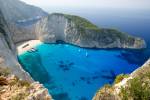
Zante
Services:Archipelago: Ionian -
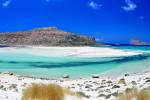
Crete
Services:Archipelago: Crete -
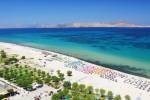
Kos
Services:Archipelago: Dodecanese -
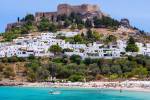
Rodi
Services:Archipelago: Dodecanese -
Naxos
Services:Archipelago: Cyclades -
Paros
Services:Archipelago: Cyclades -
Antipaxos
Services:Archipelago: Ionian


